
Materials guide
How our sails are built and how to choose the right material for your boat.
A sail works well when its fibres are oriented along the load paths. The way they are laid out decides how much the sail weighs, how much it stretches, how long it lasts and how long it keeps its designed shape. That is why our materials are grouped by construction: cross-cut, radial and membrane. And there is a category dedicated to graphene sails, born from the patent developed with the Istituto Italiano di Tecnologia.
Every construction has its range of use and its limits, including boat size. The choice depends on how you use the boat, cruising or racing, on its length, on the type of sail and on the crew who will use it. We have a wide range of fabrics, shapes and construction technologies: here you will find the characteristics of each material, and the final choice is made together with a sail designer.
-
Cross-cut
The cross-cut is the great tradition of sailmaking. Made mainly in hard-wearing Dacron, it is the ideal companion for carefree cruising. Although prolonged use tends to dull its aerodynamic performance compared with modern membranes, its remarkable longevity never lets you down. Suited to boats up to 50 feet to keep weight down, it remains a timeless classic that combines heritage, strength and safe sailing.
-
Radial
Radial construction divides the sail into many panels, each aligned with the main load paths at that point. This way 90% of the structural fibres work in the right direction and the shape lasts longer, even in the deepest profiles. Compared with a membrane it weighs and stretches a little more, but it needs a smaller initial investment. It is the standard for Flying Codes and spinnakers and, with laminated fabrics or Dacron, it suits performance cruising and club racing. For upwind sails, above 70 feet it is better to move to oriented fibres.
-
Membrane
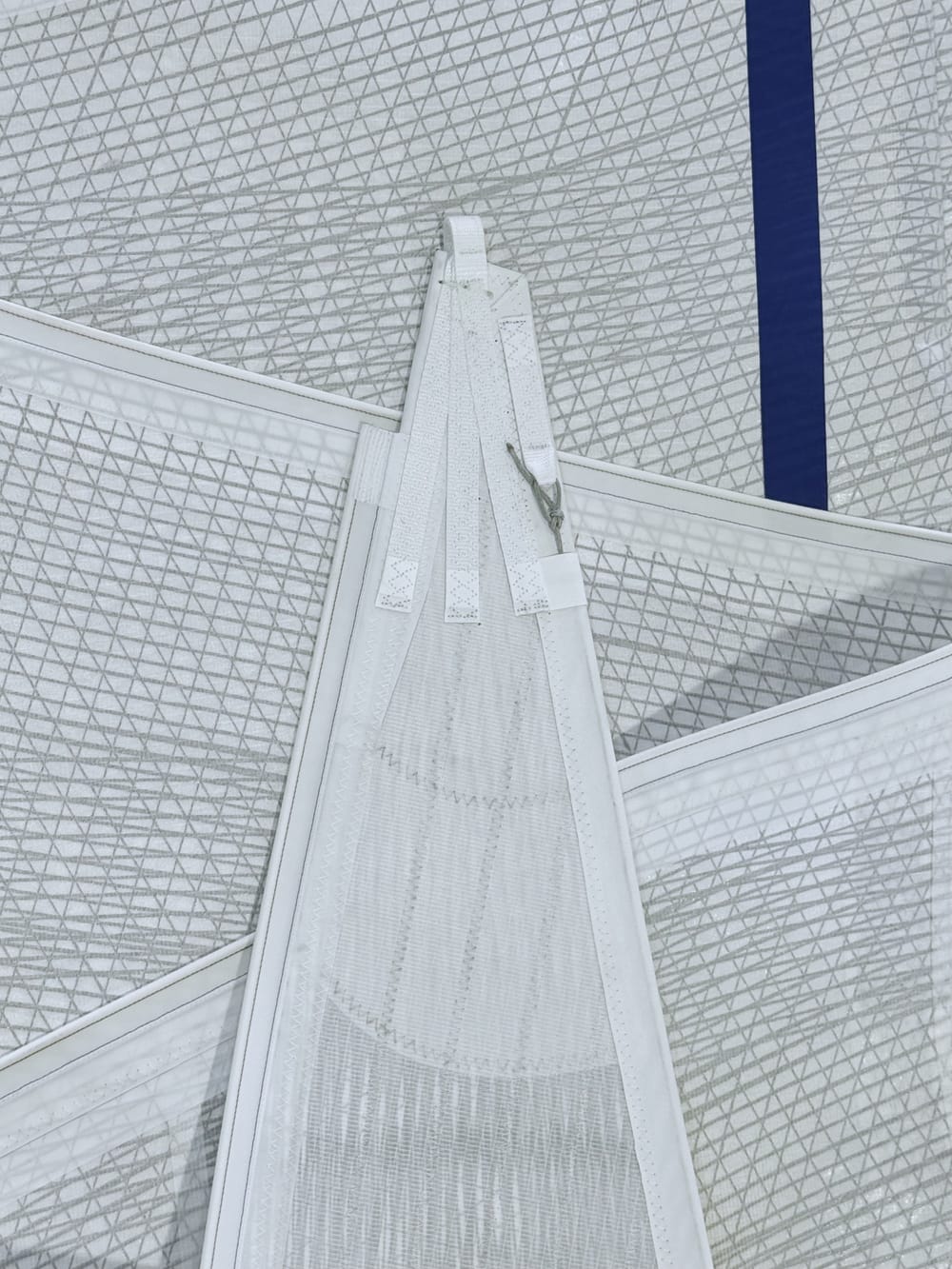
Link is the VENTI Sails oriented-fibre membrane that drives your boat at 100%. Key features: yarns oriented to the millimetre along the loads, chemical cross-linking bonding for maximum hold and flexibility, and an in-house supply chain to guarantee consistent quality and competitive prices. Finishes can be customised to resist wear and flutter. It is the ultimate technology for performance cruising and racing.
-
Graphene
L-Link Framed G+ sails are born from the patent developed in Genoa with the Istituto Italiano di Tecnologia, to date the only international patent for sails using graphene. Graphene makes it possible to apply a layer with a laminar structure to the fibres, integrating them into a network that is virtually impossible to break apart. The result is an extremely light sail, effectively not laminated and therefore not subject to delamination, and more resistant to abrasion. It is designed for light and medium-light racing sails; for One Design classes that do not allow carbon there is the version without graphene, L-Link Framed G-.
Let's design your sail
Tell us about your boat and how you sail: we'll choose the right construction and material with you.
Request a quoteWarranty
The fabrics used for Venti sails are guaranteed for 5 years from the date of “sail ready” notification. While it is normal for all fabrics to experience some deterioration in their physical properties during use, the above warranty stipulates that if a sandwich fabric becomes significantly delaminated, or a woven fabric becomes visibly more fragile than its original characteristics, verification of such defects will result in partial or total replacement of the sail. Coverage is guaranteed for sails used for normal recreational or competitive sailing and is valid when the sail is used in a seamanship way, within its wind range, and is not exposed to sun or weather when not in use.