
The Graphene patent
The world's first sail with graphene was born in Genoa, from research at the Istituto Italiano di Tecnologia.
Genoa, 2017
It all starts with an idea: a thinner, lighter sail. In 2017, in Genoa, Vittorio D'Albertas, Pietro Pinucci and sailor Lorenzo Bacigalupo begin talking about it. The material is developed by researchers from the Smart Materials group at the Istituto Italiano di Tecnologia, Gabriele Nanni and Ilker Bayer, led by Athanassia Athanassiou. In 2018 IIT files the patent.
- 2017 The idea
- 2018 The patent
- 2019 Racing
- Today Venti Sails
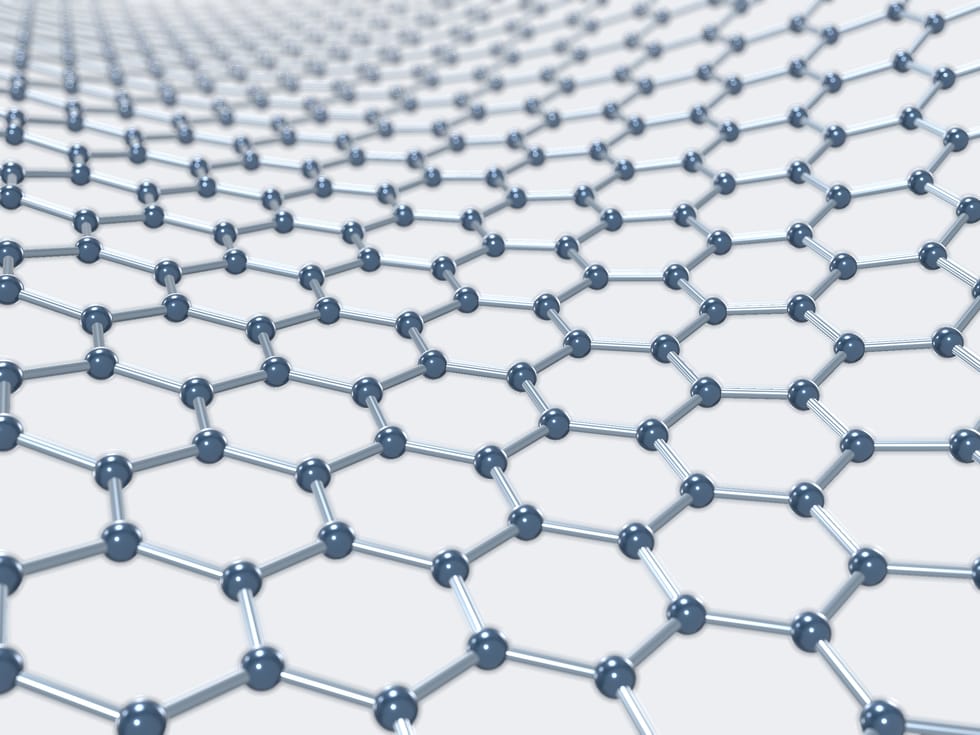
Two-dimensional, like a sail
A sail works as a surface: it is almost a two-dimensional object. Graphene truly is one: a single layer of carbon atoms arranged in a honeycomb, one atom thick. In 2004 two physicists in Manchester isolated it by peeling graphite with sticky tape, and in 2010 they won the Nobel Prize. It is the strongest material ever measured, and so dense that not even helium can pass through it.
The enemy of laminated sails
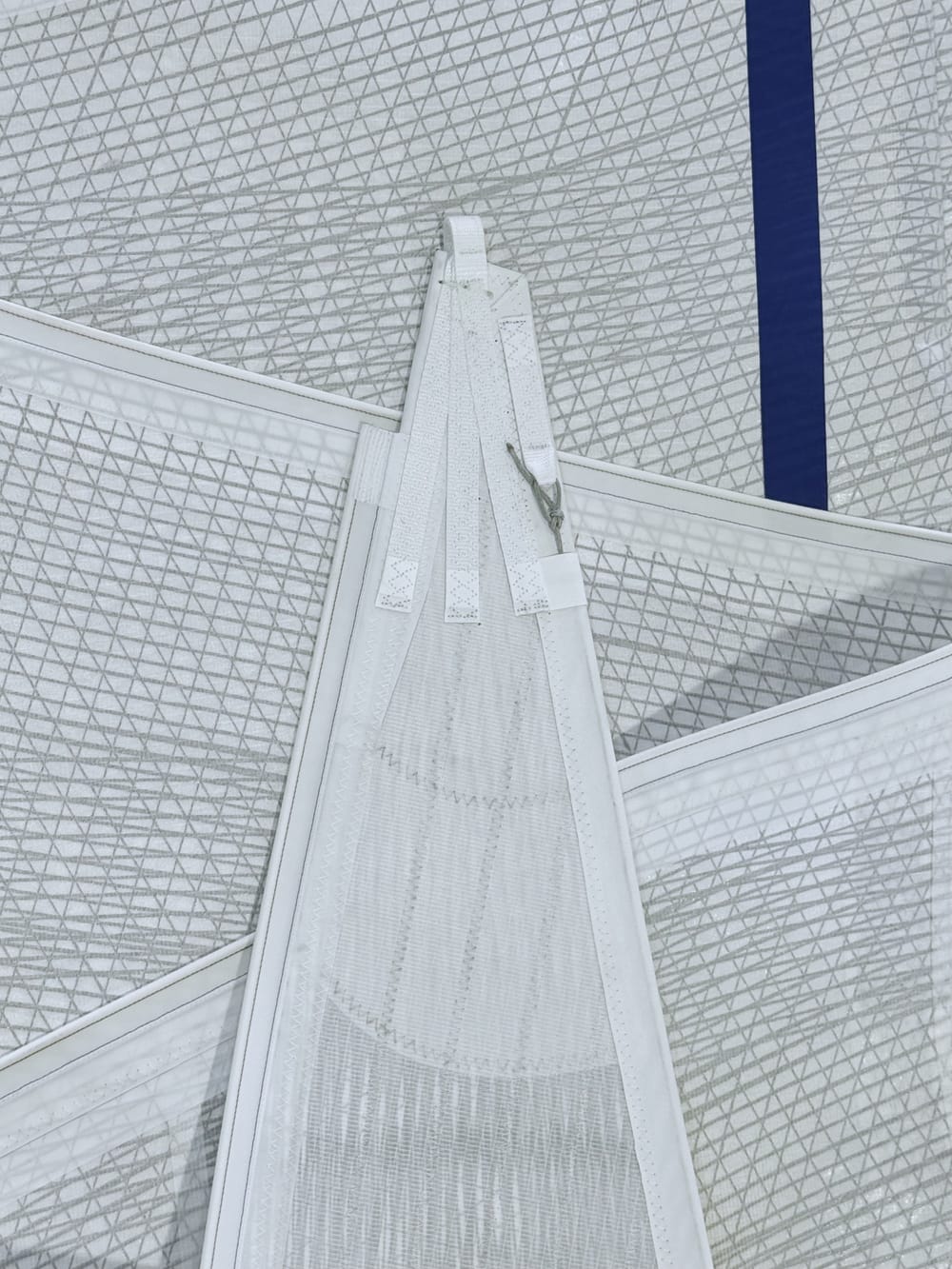
A laminated sail is a sandwich: film, fibres and another film, bonded with heat and pressure. Tiny air bubbles remain around the fibres, and no roller can remove them all. With sun, loads and time, that is where the layers start to separate: the sail delaminates and loses its shape.
Not just a product: a process
In our sail the layer over the fibres is not glued on: it is polyurethane, sprayed on as a liquid, that cures at room temperature and wraps every fibre without leaving gaps. Inside it are tiny graphene platelets that make the skin stiffer. The result is L-Link Framed G+: a sail that is effectively not laminated, and so does not delaminate.
From the lab to the race course
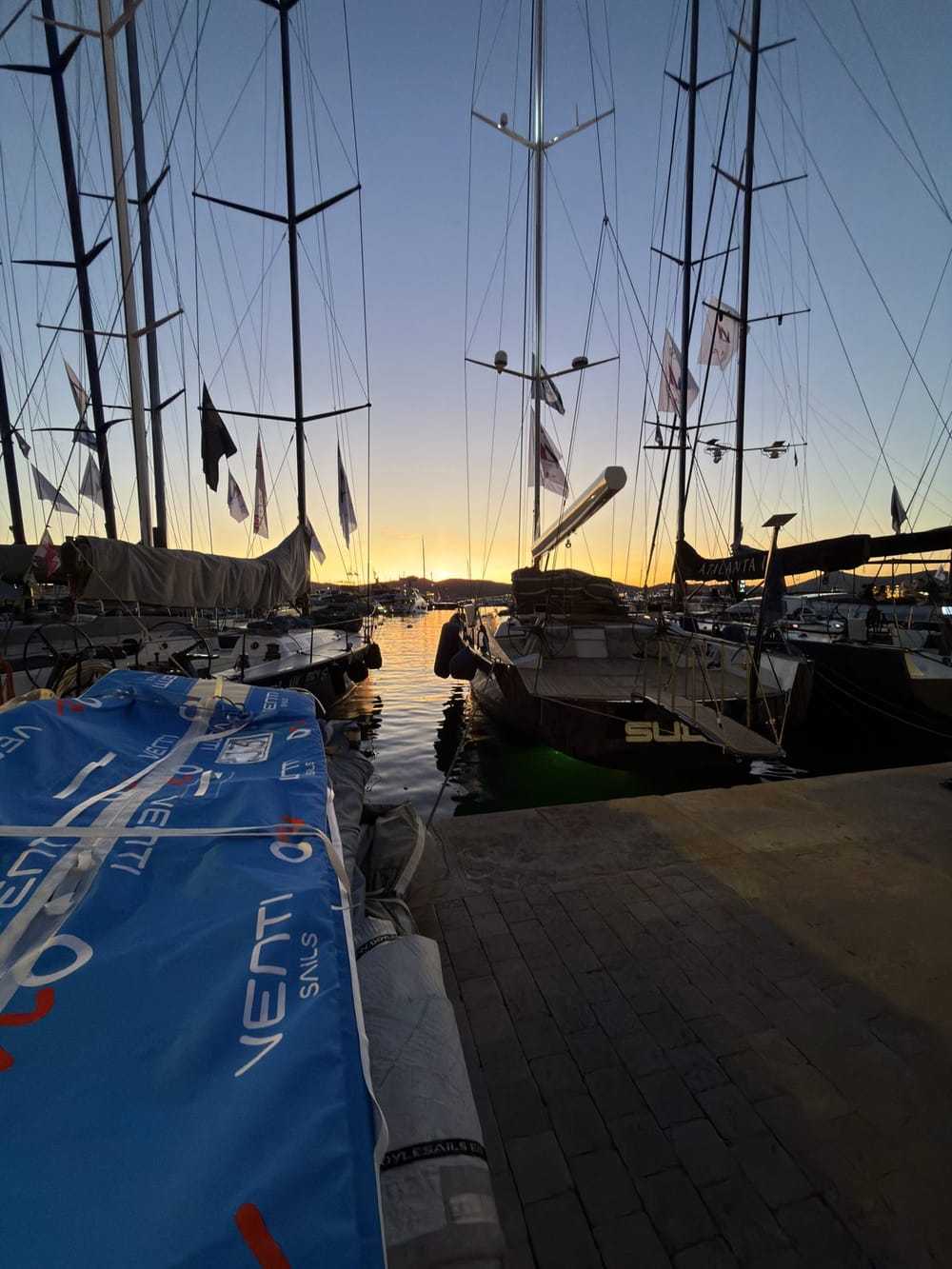
In 2019 the first three graphene sails, each about 60 m², raced on board Quantum Racing in the 52 Super Series, one of the leading international circuits, and were presented at the Genoa International Boat Show. The Istituto Italiano di Tecnologia called it the world's first sail with graphene.
What changes on the water
-
Lighter
Up to 20% lighter than a similar sail of the same size: lighter where strength isn't needed, reinforced only where it is.
-
No delamination
With no air bubbles between the layers, the skin stays bonded and stands up better to abrasion.
-
Holds its shape
Graphene stiffens the skin: the sail keeps its designed shape while staying flexible and easy to fold.
G+ and G-
Graphene is carbon. For One Design classes that don't allow carbon there is L-Link Framed G-: the same patented process, without graphene.
We are only at the beginning of what the patent makes possible.
← Back to Technology